10.1
Separate Construction Query and Maintenance Costs
The cost of a graph augmented system extends beyond model calls for one answer. Construction includes parsing, extraction, entity resolution, graph processing, and summaries. Querying includes routing, retrieval, reranking, generation, and verification. Maintenance includes updates, corrections, permission changes, and human review. Record all three over a defined period, distinguishing one time expenditure from costs growing with documents or requests. This makes it possible to judge whether an expensive index can be reasonably amortized across many queries.
A simple period cost equals construction, updates, query count multiplied by average query cost, and operations. Every quantity needs units and measurement boundaries. Model usage, compute time, storage, and human hours cannot be added without conversion. Monetary estimates require dated prices and their sources. This report instead uses explicitly assumed cost units for demonstrations, avoiding unstable external quotations. Query cost also varies by task. Thematic synthesis may require many reports while precise lookup may require one passage. Cost analysis should follow the task distribution rather than treating a complex query as representative of all requests.
10.2
Allocate Latency Budgets across the Query Path
Users experience end to end waiting time rather than one retriever's isolated duration. Permission checks, network transfer, graph expansion, image loading, and generation can all become bottlenecks. Measure stage distributions before selecting optimization targets. If generation dominates, improving a millisecond graph query may not change the experience. If rare large traversals create a long tail, average latency hides the issue. Record medians and higher percentiles by task type, and define whether timeouts produce partial results or explicit failure.
Budgets can be assigned before execution or adjusted as evidence appears. An exact identifier yielding one current authoritative record may not require further network expansion. A relational question missing one crucial connection may justify more directed retrieval. Stopping rules should reflect evidence sufficiency rather than only a fixed number of steps. Candidate limits, allowed relation types, and temporal scope prevent unbounded expansion. When a budget is exhausted, explain the evidence coverage achieved instead of treating unsearched regions as absent. Performance optimization therefore selects answer scope and reliability together, rather than merely accelerating text production.
10.3
Bind Caches to Knowledge and Permission Versions
Caching reduces repeated work but can also repeatedly distribute outdated or unauthorized information. Identical query text does not guarantee answer reuse because permissions, knowledge versions, and temporal conditions may differ. Cache keys should include normalized questions, resource scope, knowledge version, model configuration, and permission scope. Cached objects should retain evidence dependencies for invalidation when sources change. Global summaries require special care if they combine access levels. Filtering original passages at the final answer stage cannot remove information already exposed inside a summary.
Different layers can cache parsing by content, embeddings by model and content version, retrieval candidates by scope, and answers under stricter conditions. Their invalidation rules should not collapse into one expiration period. Tightened permissions may leave parsing reusable while requiring answer revalidation. A model upgrade may require new embeddings without duplicating original resources. Tests should cover these combinations. High hit rates do not automatically indicate a better system: cached stale or incomplete answers can produce errors consistently. Cache correctness, cost savings, and invalidation delay should accompany hit rate as measures.
10.4
Preserve Critical Exceptions during Compression and Pruning
Reducing context and storage can involve compressing chunks, merging repeated observations, pruning edges, or selecting coarser communities. Frequency and length are poor substitutes for importance. A short exception can reverse a rule, and a rare relation may be the only evidence for an incident. Compression should identify negation, quantities, units, time, and exceptions, then verify their preservation. Material that cannot be safely summarized can retain original wording while less important background receives lower priority. Compression quality requires both task outcomes and constraint preservation.
Graph pruning also needs evidence roles. Peripheral nodes absent from a shortest path may contain counterexamples or identity distinctions. Removing them can make a graph visually cleaner but answers more one sided. A compact navigation graph can support fast discovery while a linked evidence graph retains verification material. Stable identifiers connect them without placing every object in model context. Repeated sources can be combined in presentation while preserving counts and independence assessments, so republication does not masquerade as independent support. Useful compression removes redundancy while retaining differences capable of changing a conclusion, rather than merely minimizing nodes or prompt length.
10.5
Observe Quality Drift and Operational Feedback
Data and user questions change after deployment. New terminology, cameras, and document formats can degrade extraction or retrieval while model services continue returning successful responses. Periodic sampling and fixed sentinel questions can monitor unresolved entities, unsupported answers, invalid citations, and missing modalities. Changes need interpretation alongside input distributions rather than automatic attribution to models. More complex user questions can lower average success because the task changed. Monitoring should distinguish data drift, task drift, and system failures.
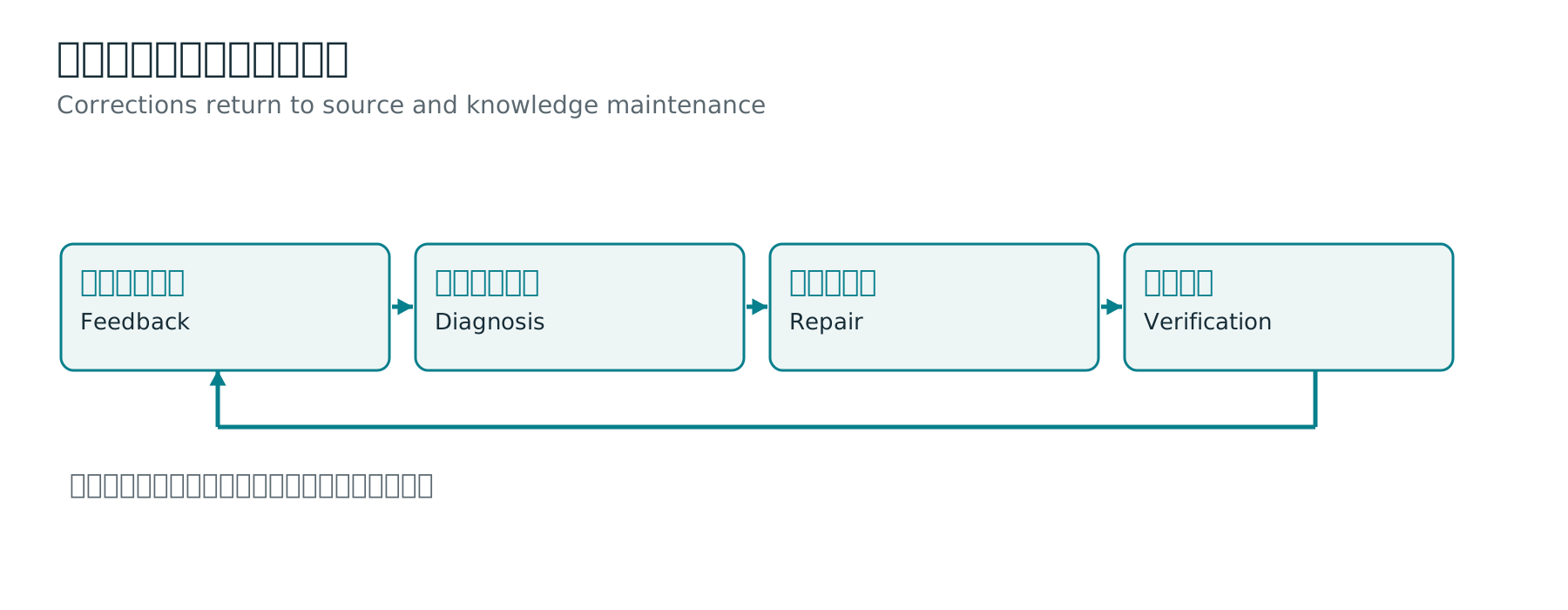
Feedback should let users identify a problematic claim or source rather than only rate an entire answer. Corrections enter a maintenance queue classified by source errors, extraction errors, identity merges, retrieval omissions, or generation overreach. Repeated failures can become regression cases, while user feedback should not automatically become a correct label. Disputed feedback needs both the original comment and review outcome. Teams should measure correction time and recurrence, since detecting problems without repairing them does not make a system reliable. The improvement loop connects visible errors to editable components and confirms repairs through independent checks.
Original design
10.6
Match Adoption Thresholds to Value and Maintenance Capacity
GraphRAG adoption need not begin with every document and feature. Choose a bounded scenario with recurring questions and available evidence, then test whether graph structure reduces important errors or improves search efficiency. Define success beforehand through necessary evidence coverage, review time, and error severity. Selecting only questions a demonstration handles well cannot establish real value. Pilots should include updating and correction because static demonstrations conceal maintenance burdens. A small graph that can be repaired continuously is closer to a usable service than a huge unmanageable graph generated once.
Adoption can proceed through evidence that data can be organized, retrieval gains are real, user tasks benefit, and operations are affordable. Each stage permits stopping or simplifying. If hybrid vector retrieval meets the goal, graphs may remain only for explanations or selected relational queries. Visual processing can be invoked only where necessary. Team capabilities in ontology maintenance, data review, and incident handling are part of cost. Pilots should define exit routes for exporting evidence, changing models, and restoring earlier workflows. Replaceability allows decisions to follow new evidence rather than becoming locked into early architectural commitments.